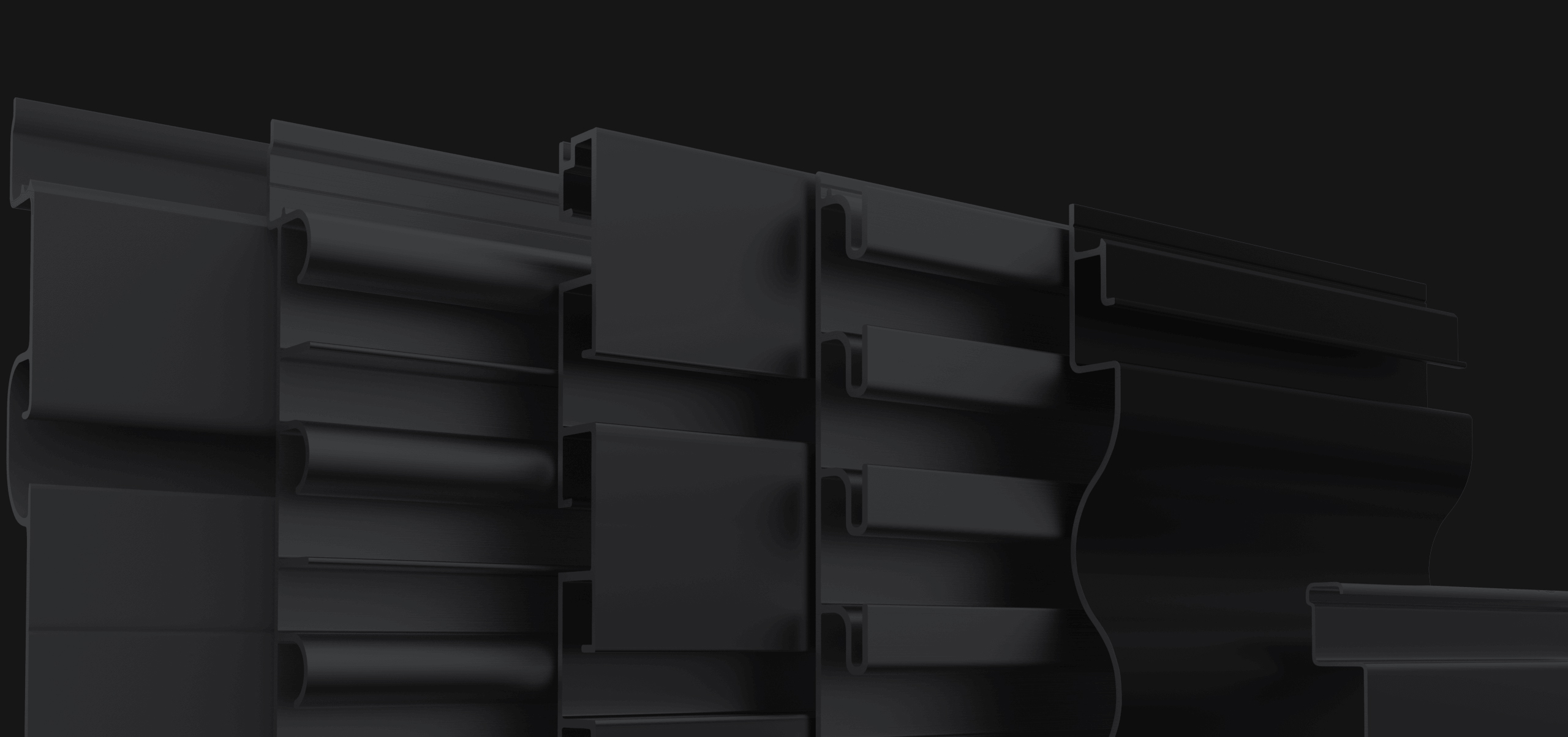
The real difference is not the holes. It is what the surface will hold.
A pegboard back accepts a hook. That is the accessory vocabulary, and it constrains the merchandise to whatever hangs from a hook without pulling the board.
A slatwall panel accepts hooks, shelves, brackets, faceouts and shelf hardware, and a Megawall panel carries over 50 lbs per linear foot doing it. The vocabulary widens, and with it the set of categories the bay can carry.
That is the whole argument. Everything else — appearance, durability, cleanability — is real but secondary to the fact that one surface can merchandise categories the other cannot.
Side by side
| Attribute | Pegboard | Megawall slatwall |
|---|---|---|
| Accessories | Hooks | Hooks, shelves, brackets, faceouts |
| Capacity | Limited by the board | Over 50 lbs per linear foot |
| Material | Board | Formed and welded steel or aluminum |
| Failure mode | Holes elongate; board sags or tears | Metal slat; no board to give way |
| Placement control | Fixed hole grid | Continuous slat, spacings 1″–3″ O.C. |
| Cleaning | Absorbs; edges wear | Aluminum wipes down, resists dust |
| Fire code | Depends on the board | Meets applicable fire codes |
| Retrofit into a gondola | Already there | Yes — about a minute per bay |
You do not have to replace the fixtures to change the surface
The usual objection to moving off pegboard is that the gondolas are fine and replacing whole runs is not justifiable. That objection is correct — and it is why NuPanel exists.
NuPanel drops into the standard gondolas already on your floor and replaces the pegboard back with 1″ on center aluminum slatwall. It uses a clip system on 6″ increments, needs no drilling, and takes about a minute per section. You keep the uprights, the bases and the footprint; you change the merchandising surface.
At roughly a minute a bay, a retrofit fits inside an overnight window. That is usually the difference between a merchandising improvement that happens and one that stays on a list.
Read how a retrofit programme runs, or go straight to the NuPanel specifications.