
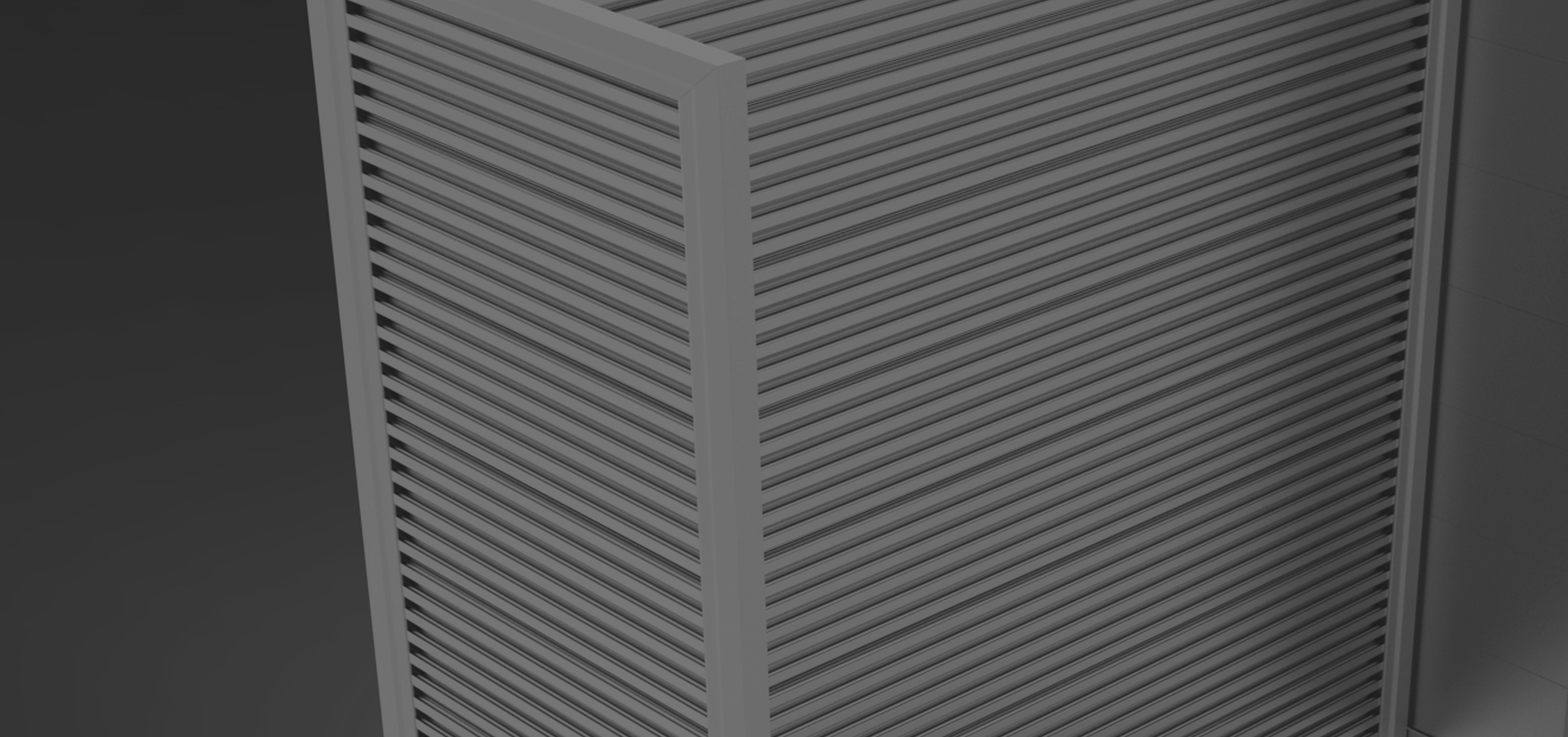
More facings per foot, without giving up load capacity.
Hardware is the sector where the two hard requirements collide. You need the SKU density of a close slat spacing and the load capacity of a heavy system — and most products make you choose.
The constraint
Slat spacing is a merchandising decision with a capacity consequence.
Close the slat spacing and you get more placement options per vertical foot: hooks land where the planogram wants them instead of at the nearest 3″, and a bay carries more facings. Widen it and you get a cleaner wall suited to bigger, bulkier goods.
On most systems, going denser costs you capacity. Megawall aluminum runs 1″, 1⅜″, 1½″, 2″ and 3″ on center and is rated over 50 lbs per linear foot across the range — the same working figure as the 3″ steel system. The density decision and the load decision come apart.
Where the merchandise is genuinely heavy, steel at 3″ on center with heavy-duty brackets is still the right specification. Most hardware floors end up running both.
What we usually specify
Hardware & DIY- Dense categories
- Aluminum at 1″ on center
- Heavy categories
- Steel at 3″ on center
- Capacity
- Over 50 lbs per linear foot — both systems
- Aluminum spacings
- 1″
- 1⅜″
- 1½″
- 2″
- 3″
- Aluminum styles
- Flat Back
- Hidden Fastener
- Double Sided
- Shelving
- High-performance 6″ and medium-duty 3″
- Brackets
- 12″ to 18″, plus custom engineering
- Certification
- Fire code compliant · aluminum LEED certified
What we would specify
Usually two systems on one floor.
Dense aluminum where the SKU count is high, steel where the weight is, and brackets for what neither holds.

Aluminum Slatwall
Spacings from 1″ to 3″ on center, LEED certified, 50%+ recycled, seamless 8′ hidden-fastener runs.
Aluminum specifications
Steel Slatwall
Over 50 lbs per linear foot at 3″ on center, 32 sq ft interlocking sections, eleven finishes, fire-code compliant.
Steel specifications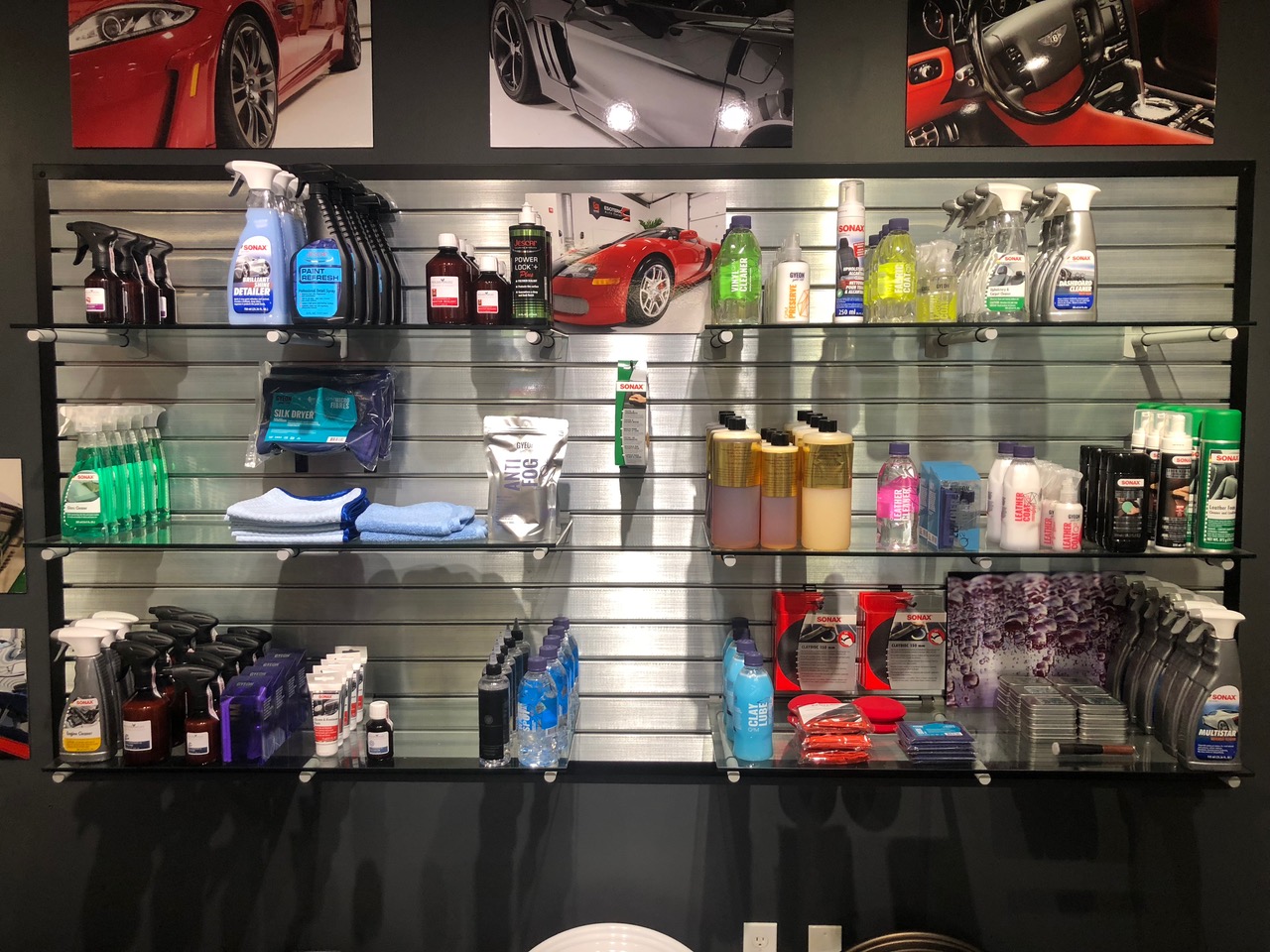
Shelving & Heavy-Duty Brackets
High-performance 6″ and medium-duty 3″ shelves, plus brackets from 12″ to 18″ and custom bracket engineering.
Shelving and bracketsDetail that matters here
What separates a hardware fixture that works.
Spacing per category
Fasteners and small hand tools want 1″ on center. Power tools, timber goods and bulk want 3″. Running both on one floor is normal, and the trims match across them.
Brackets for the odd stuff
Every hardware store has a category nothing standard holds. Brackets run 12″ to 18″, and custom bracket engineering covers the rest.
Cleaning and wear
Aluminum wipes down and resists dust; powder-coated steel takes knocks. Both beat a laminated board edge in an aisle that sees trolleys.
Good to know
Common questions from hardware & home improvement buyers
Related products
Ready to start
Send the planogram and the heaviest category.
Spacing follows the planogram; material follows the weight. With both we can specify the wall properly rather than compromising on one of them.